Norway’s Resistance Museum at Akershus Fortress
What it is
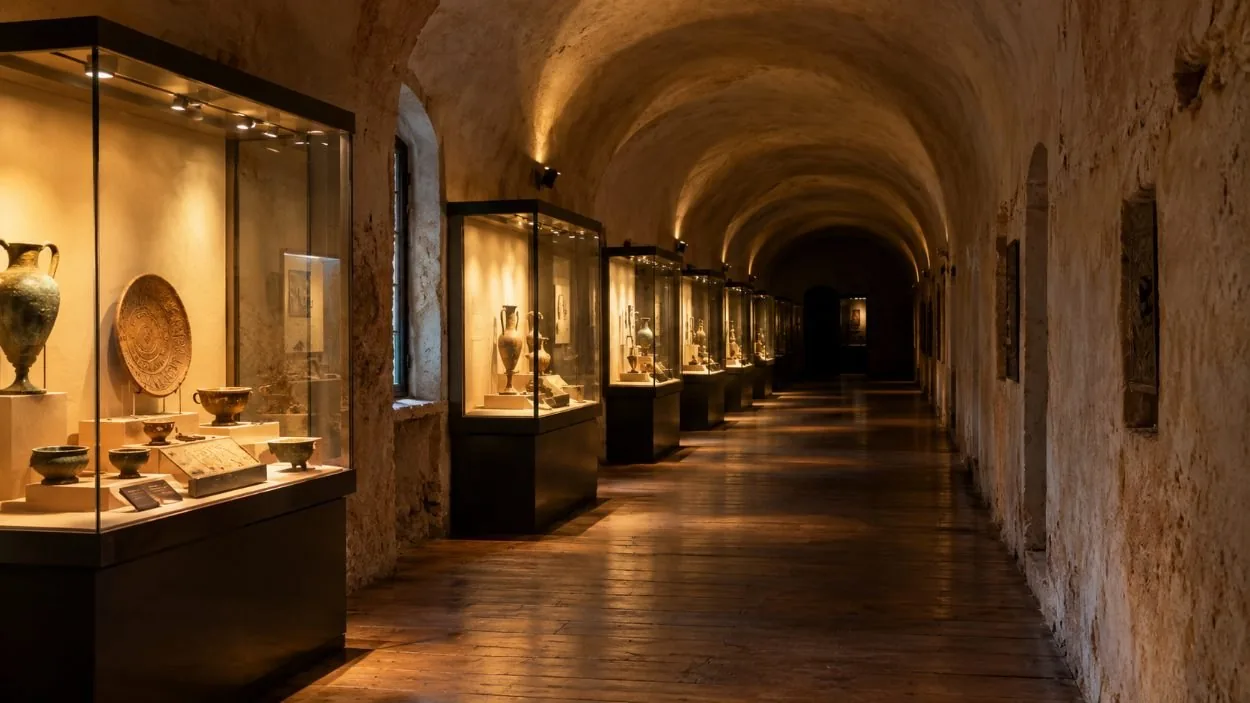
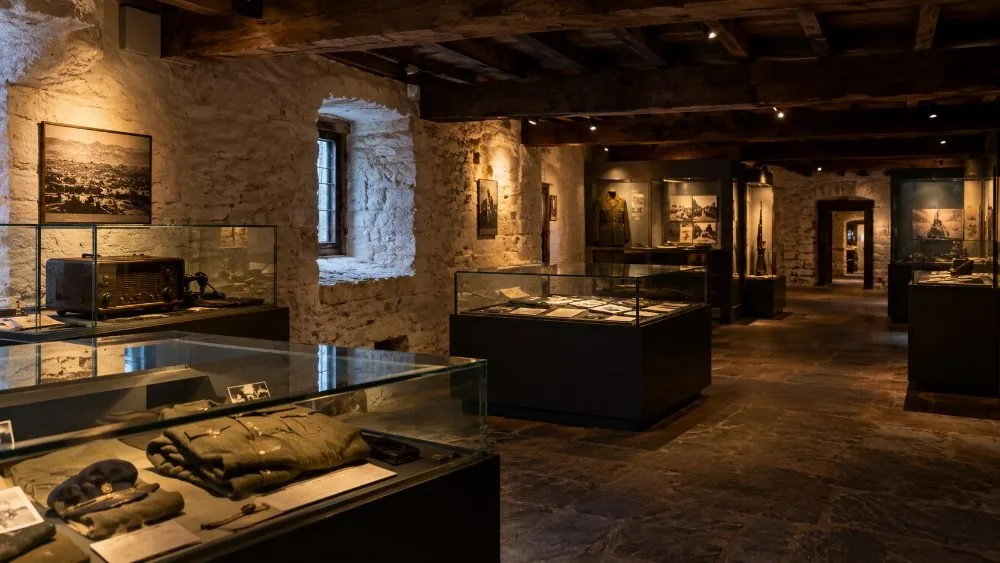
The museum tells the story of the occupation years and of the Norwegian home front: how the country was taken, how people lived under it, and what the resistance did about it. It is housed at the top of the fortress in a building from the 1600s, a short walk up from the main gate. The route up is part of the point — the museum stands on the ground the occupation used.
The collection
Behind the exhibition rooms is a working archive. The museum holds around 5,000 objects from the occupation years, some 40,000 photographs and over 600 shelf-metres of archive material, plus a reading room and a library. Most visitors never see the archive, but it is the reason the displays can be as specific as they are.
The ground it stands on
Germany occupied the fortress after the invasion in 1940 and used it as barracks, prison and execution site. More than forty Norwegian resistance members were executed at Akershus, among them members of the sabotage group Pelle-gruppa. On 17 March 1945, fourteen Norwegians were shot here, including men involved in Operasjon Betongblanding, a sabotage operation against railway infrastructure carried out three days earlier. Their remains were sunk in the Oslofjord in weighted wooden crates, east and west of Nesodden. In March 2025, eighty years later, underwater drones located the remains of seven of them. The association Æresgjeld puts the number executed late in the war and dumped in the fjord at 42.
On 11 May 1945 the fortress was handed over to Terje Rollem on behalf of the Norwegian home forces. A marker in front of the Commandant’s Residence records it. These are recent events with living families attached to them, and the museum treats them that way. So does the history page.
Hours and tickets
| Season | Hours |
|---|---|
| 1 June – 31 August | Daily 10:00–17:00 |
| 11 September 2026 – 30 April 2027 | Daily 10:00–16:00 |
Entry is ticketed and free with the Oslo Pass. A combined ticket covering all three museums is sold at the visitor centre by Karpedammen. Full gate and museum hours are on the opening hours page.
What works
- Open and ticketed while the castle is shut
- Free entry with the Oslo Pass
- Specific, well-documented, not padded out with atmosphere
Worth knowing
- Uphill from the main gate, and the last stretch has stairs
- Heavy material; not an obvious hour with young children
- Small enough that you will want something else in the same trip
Do the museum first and the ramparts afterwards, not the other way round. Coming out of the occupation rooms and onto the walls above the harbour is the better order, and it leaves you somewhere to sit and think for ten minutes.
Going in with a guide
The private tour below meets in front of Festningen at Myntgata 9, inside the fortress, and includes entry to the museum and commentary on the occupation and the resistance. It is a new listing with no rating and no reviews yet — there is nothing for me to point at, so judge it on what it is rather than on a score.
Other ways to see the fortress
 Inside the walls
Norway Home Front Museum Oslo Private Tour & Transport
 Most booked
Oslo: Guided Walking Tour of Central Oslo with Local Guide
 From the water
Oslo: Guided Sightseeing Fjord Cruise on Premium Silent Boat
Frequently asked questions
Is Norway’s Resistance Museum open?
Yes. It reopened on 11 September 2026 and runs daily 10:00–16:00 through to 30 April 2027, and daily 10:00–17:00 from 1 June to 31 August. Akershus Castle, by contrast, is closed until further notice.
Is the Resistance Museum free with the Oslo Pass?
Yes, entry is free with the Oslo Pass. Without one it is ticketed, and a combined ticket for all three museums is sold at the visitor centre by Karpedammen. The fortress grounds themselves cost nothing either way.
How long do you need at the Home Front Museum?
About an hour for the exhibition at an unhurried pace. Add the walk up from the main gate and time on the ramparts afterwards and you have half a morning — see how long to visit.
Is it suitable for children?
That depends on the child. The material covers imprisonment and executions and it is presented plainly, without softening. Older children who have studied the war get a lot from it; I would think twice with younger ones.